Scope and Purpose
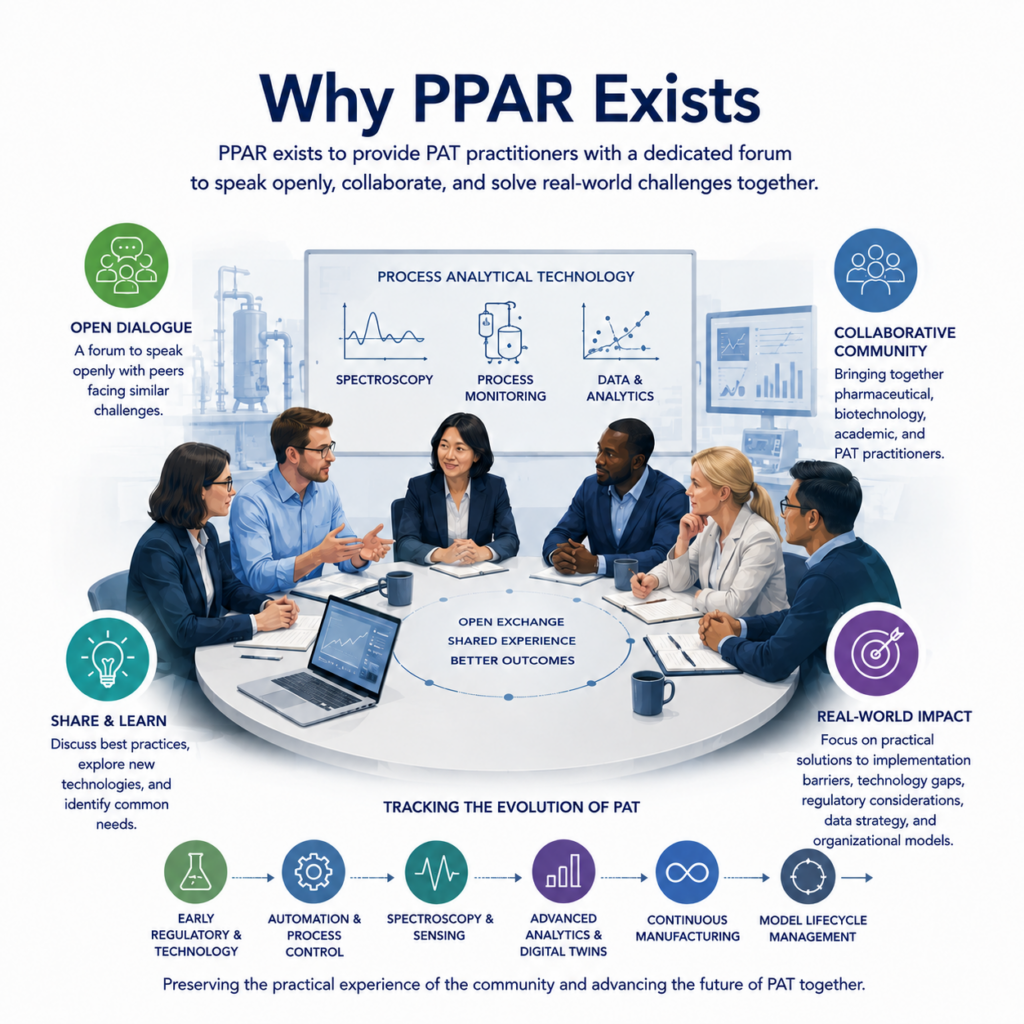
PPAR is focused on supporting an annual roundtable meeting for PAT practitioners working across pharmaceutical and biotechnology development, manufacturing, analytics, automation, and digital transformation. The purpose of the roundtable is to provide a trusted setting where participants can discuss the current state and future direction of PAT, compare practical implementation experiences, and identify areas where the industry may benefit from shared understanding. PPAR is intentionally discussion-based. It is not designed to take formal minutes, endorse vendors, or host prepared speeches. Instead, the roundtable creates space for focused technical conversation, topic introductions, benchmarking discussion, and exchange of lessons learned from the field.
Purpose
How the Forum Works
PPAR is structured as an informal, interactive roundtable rather than a standard conference.
Participants may introduce topics to help begin discussion sessions, but the value of the meeting comes from open technical exchange, group discussion, and shared practitioner experience.
The roundtable is intentionally kept to a size appropriate for meaningful discussion. Balanced participation across organizations helps preserve the collaborative nature of the forum and supports diverse perspectives from pharmaceutical, biotechnology, academic, and invited PAT practitioner communities.
This format allows participants to explore practical questions that may not fit neatly into a traditional conference presentation, including implementation barriers, technology gaps, regulatory considerations, data strategy, organizational models, and lessons learned from real-world PAT deployment.


Areas of Focus
Topics That Matter
PPAR discussions span the scientific, technical, regulatory, and organizational topics shaping the future of process analytics in pharmaceutical and biotechnology manufacturing.
Key focus areas include:
- Process Analytical Technology
- Pharmaceutical and biotechnology manufacturing
- Spectroscopy and sensing
- Automation and process monitoring
- Digital transformation
- Data analytics and multivariate analysis
- Digital twins and process modeling
- Real-time release testing
- Continuous manufacturing
- Control strategy development
- Raw material variability
- Regulatory and validation considerations
- Technology transfer and implementation
- Model lifecycle management
- Emerging technologies and industry needs
These topics reflect the practical nature of PPAR: connecting scientific innovation with real implementation experience across the PAT community.